
Imagine telling your phone:
“Call the restaurant and reserve a table for two at 7 PM.”
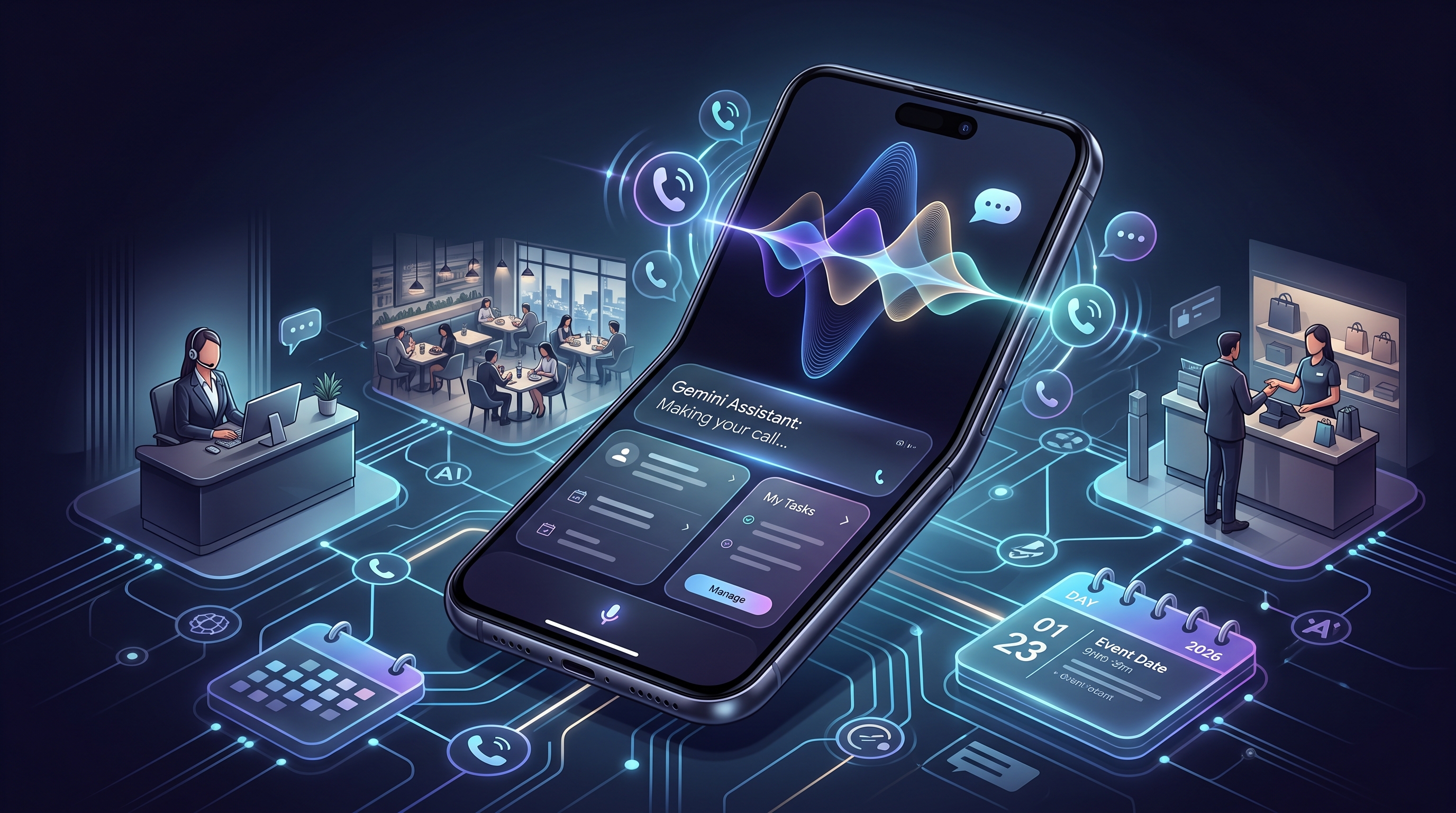
Instead of opening the Phone app, waiting on hold, navigating automated menus, and talking to someone yourself, an AI assistant handles the conversation for you.
That is the direction Google is now taking with Gemini.
Google is gradually rolling out an experimental “Call for Me” feature that allows Gemini to make certain routine business calls on a user's behalf. The feature is currently limited to eligible users in the United States, but it provides an interesting glimpse into where smartphone assistants are heading.
What Can Gemini Do on a Phone Call?
According to Google's documentation, Gemini can handle several routine tasks, including:
- Checking whether a product is available
- Asking businesses about prices or service quotes
- Finding business hours
- Booking or managing appointments
- Making reservations
- Navigating automated phone menus
- Waiting on hold while the user does something else
After the call, Gemini provides the user with a summary of what happened. Users can also follow the conversation through a live transcript and take control of the call when necessary.
This is an important change in how we think about AI assistants.
Traditional assistants mostly answer questions.
Agentic AI increasingly tries to complete tasks.
From Chatbots to AI Agents
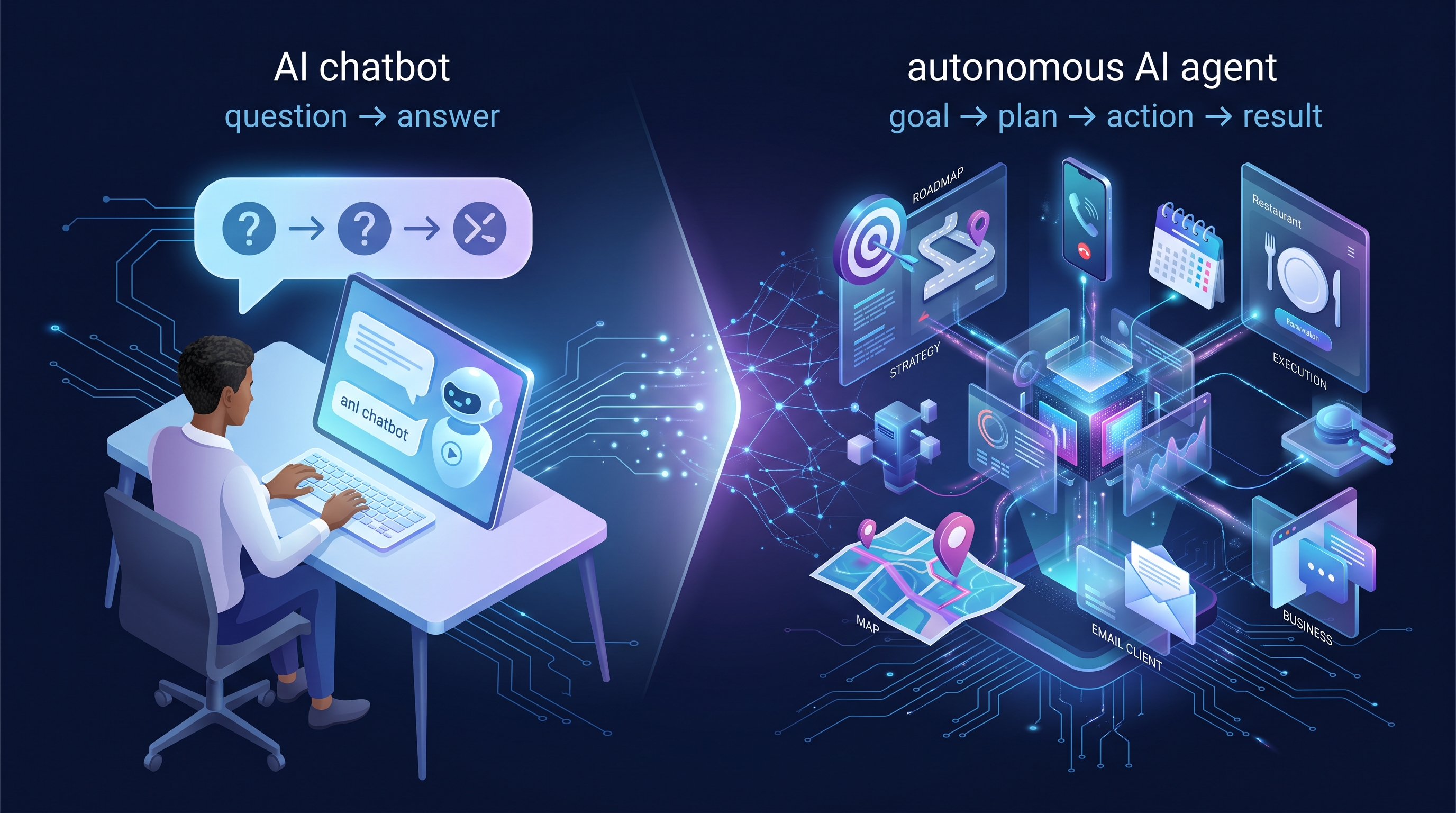
For years, AI assistants have primarily worked like chatbots:
User → Question → AI → Answer
The newer approach looks more like:
User → Goal → AI → Plans → Takes action → Reports result
For example, instead of asking:
“What restaurants are open tonight?”
you could eventually ask:
“Find me a restaurant nearby that has a table for four at 7 PM and make the reservation.”
The AI doesn't simply provide information. It becomes an intermediary between you and the real world.
Google has already been moving in this direction with agentic features in Search, including systems that can contact businesses to gather information on behalf of users.
You Still Remain in Control
This isn't designed as an invisible AI that secretly makes calls.
Google says Gemini identifies itself as an AI assistant at the beginning of the call. Users can monitor the conversation through a live transcript and can take over the call whenever necessary.
There are also restrictions.
For example, Gemini cannot use the calling system to:
- Make emergency calls
- Make payments or complete financial transactions
- Share sensitive financial information
- Share passwords or other sensitive personal information
- Make telemarketing calls
The current implementation is also restricted to eligible users in the U.S. with specific Pixel and Google app requirements.
So this isn't yet a feature that everyone can simply switch on.
Why This Matters
The bigger story isn't really about phone calls.
It's about AI becoming an agent.
A chatbot gives you information.
An AI agent can potentially:
- Understand your goal
- Decide what needs to be done
- Use software and online services
- Communicate with other people or businesses
- Complete part of the task
- Tell you what happened
Google's recent Gemini developments are part of a broader industry movement toward this model of AI. Its latest Gemini Live models are designed for more natural conversations, visual understanding, reasoning, and background task execution.
What Could This Mean for Everyday Users?
Consider some ordinary situations.
🏪 Checking product availability
Instead of calling five stores yourself:
“Find out which nearby stores have this printer in stock.”
An AI agent could potentially contact businesses and return the results.
🍽️ Restaurant reservations
Instead of waiting on hold:
“Call this restaurant and ask if they have a table for four at 7:30.”
The AI could handle the conversation and report the result.
🔧 Getting service quotations
You could ask:
“Call three repair shops and ask how much they charge for this service.”
The AI could potentially collect the information for comparison.
📅 Managing appointments
Instead of spending several minutes on the phone:
“Move my appointment from Thursday to next Monday afternoon.”
Again, the AI could potentially handle the routine conversation.
But There Is a Big Problem
There is an important limitation that shouldn't be ignored.
Human conversations are messy.
People don't always follow predictable scripts. A receptionist might ask an unexpected question. A shop employee might misunderstand the request. Prices can change. Policies can be complicated.
That's why Google's current rollout is deliberately limited and experimental. Google says it is starting small because real-world conversations are nuanced.
There is also a trust question:
How much authority should we give an AI to act on our behalf?
As AI agents gain the ability to make calls, send messages, book appointments, purchase things, access accounts, and interact with businesses, mistakes become more consequential than a wrong chatbot answer.
That means future AI systems will need strong user controls, transparency, authentication, and clear records of what the AI actually did.
The Bigger Future of Smartphones
The smartphone may gradually move from being a collection of apps to becoming an interface for AI agents.
Instead of opening:
- Google Maps
- Phone
- Gmail
- Calendar
- Shopping apps
- Booking websites
- Messaging apps
you may increasingly tell an AI what you want and let it coordinate the necessary services.
The interesting question is no longer simply:
“How smart is the AI?”
It is becoming:
“What is the AI allowed to do?”
That distinction could become one of the most important issues in consumer technology over the next few years.
What About Nepal?
For Nepali users, this technology isn't immediately available in the same form. Google's current Gemini calling requirements specify U.S. availability, a Pixel 11 with a U.S. SIM, a Google AI subscription, and other software requirements.
However, the underlying technology is not limited to the United States.
As AI agents become better at voice conversations and businesses increasingly adopt automated phone systems, similar capabilities could eventually become useful for Nepali businesses and consumers.
Imagine saying:
“Damak ko yo hotel ma bholi beluka 7 baje dui jana ko room cha ki chaina sodhera booking gara.”
An AI assistant could potentially make the call, communicate in the appropriate language, and report the result.
That is a much bigger idea than simply having an AI chatbot on your phone.
Final Thoughts

Google's Gemini calling experiment is an early example of a broader shift from AI that talks to AI that acts.
The technology is still limited, experimental, and geographically restricted. But the direction is clear: AI assistants are moving beyond answering questions and toward completing real-world tasks.
The next generation of smartphones may not simply be devices where we use apps.
They may become devices where we tell AI what we want—and let AI coordinate the apps, services, and people needed to get it done.
Technology is moving from “Ask AI” toward “Let AI handle it.”