

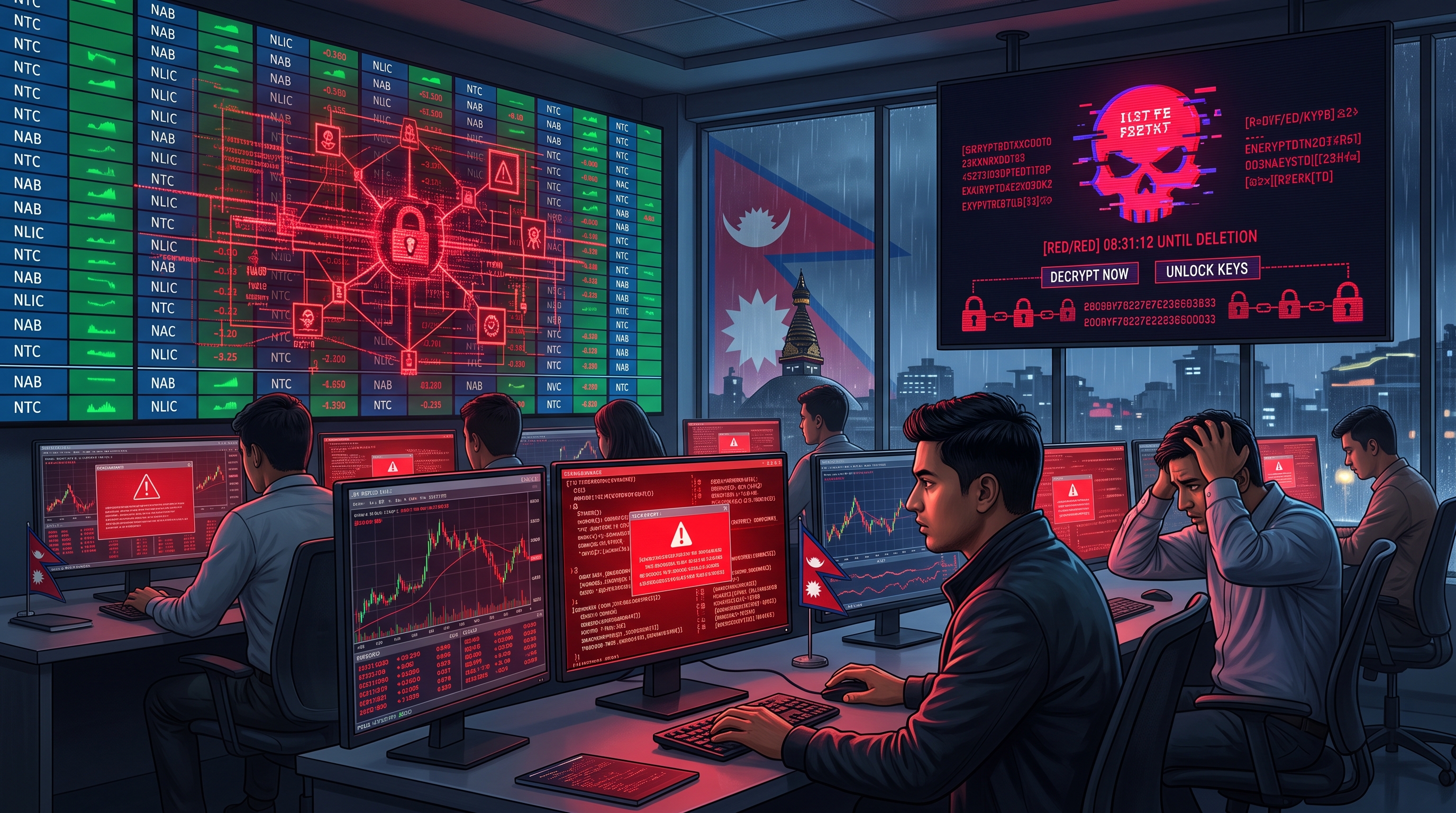
Nepal's stock market was forced to stop trading for a day after a ransomware attack disrupted the infrastructure supporting dozens of brokerage firms.
What Happened?
On September 20, 2026, a ransomware attack was detected at Data Hub Pvt. Ltd., a data-centre provider supporting the Trading Management Systems (TMS) of 72 brokerage firms. The affected systems were isolated while security teams investigated the incident.
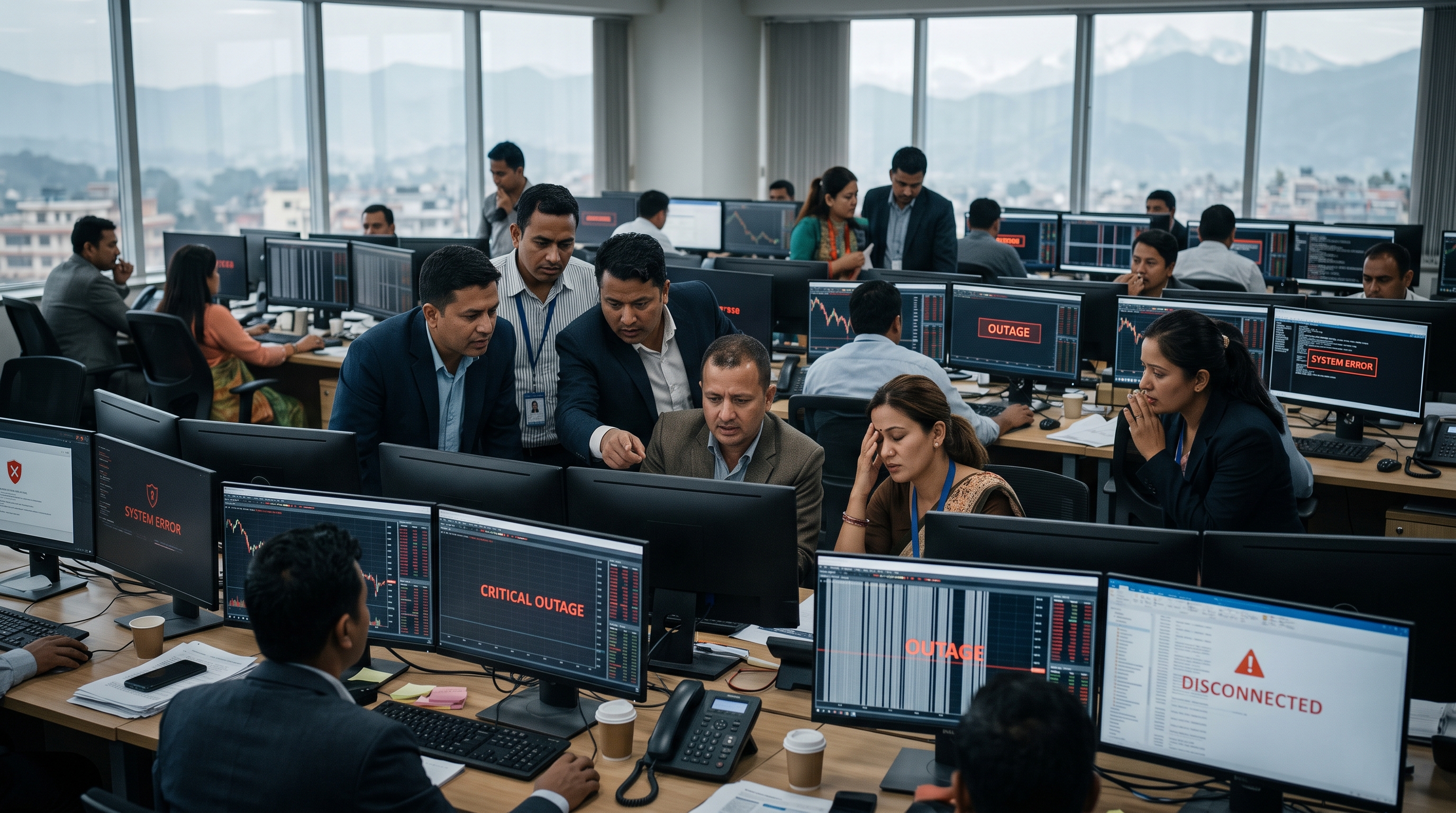
Because the affected infrastructure was connected to other systems and there were concerns about cybersecurity, operational and potential data risks, NEPSE suspended trading on September 21.
Was NEPSE Itself Hacked?
This distinction is important.
Available reports indicate that the ransomware attack targeted Data Hub's infrastructure, rather than confirming that NEPSE's core trading engine itself was compromised. However, the interconnected systems created enough risk for NEPSE to halt trading as a precaution.
What Happened to Investors?
Trading resumed on September 22 after the affected systems were restored. Data Hub said a complete backup had been taken before the attack and stored separately, while forensic and security checks were carried out before restoration.
There has been no confirmed public finding in the sources reviewed that investor funds or securities were stolen. The incident did, however, raise concerns about the resilience and concentration of Nepal's financial technology infrastructure.
Why Does This Matter?
The incident highlights a major cybersecurity lesson:
A financial system can be disrupted even when the central exchange itself is not directly compromised.
When many organizations depend on shared infrastructure, a single security incident can have effects across an entire ecosystem.
For Nepal's growing digital economy, stronger cybersecurity, isolated backups, disaster recovery plans and resilient infrastructure will become increasingly important.

The Bottom Line
The NEPSE incident was more than a one-day trading interruption. It demonstrated how cybersecurity and infrastructure resilience are now directly connected to the stability of Nepal's financial system.
As Nepal becomes more digitally dependent, protecting critical technology infrastructure will be just as important as building it.